EN
EN  EN
EN DA
DA NL
NL FI
FI FR
FR DE
DE IT
IT JA
JA KO
KO NO
NO PL
PL PT
PT RO
RO RU
RU ES
ES SV
SV TL
TL ID
ID SK
SK UK
UK VI
VI TH
TH TR
TR FA
FA BE
BE LA
LA UZ
UZ
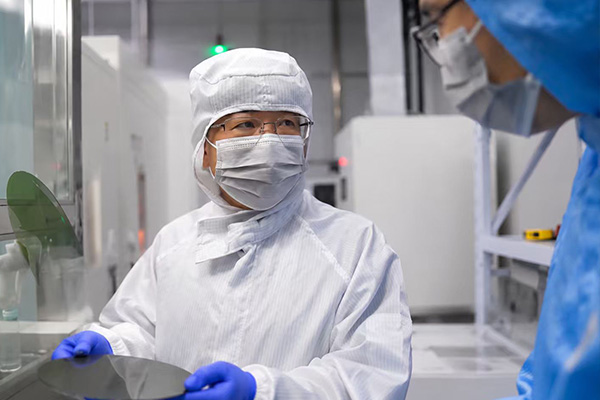
Even minor challenges may cause significant losses in the process of semiconductor production. In the case of epitaxy processes, for example, the smallest particle on a wafer surface may affect the quality of the film and lead to various defects resulting in reduced yield of the wafers per batch. The use of Cvd sic holder becomes crucial for overcoming these challenges. High temperature tolerance, cleanliness of surfaces and high chemical inertness are some of its key features that allow maintaining optimal growth conditions.
Why CVD SiC Wafer Holders Are Replacing Traditional Graphite Fixtures
Traditional graphite fixtures have served the semiconductor industry for many years, but the demands of modern epitaxy have changed. As wafer sizes grow and device structures become more advanced, manufacturers need equipment that can deliver cleaner processing, better stability, and longer service life. This is why many production lines are moving toward CVD SiC wafer holders.
One of the biggest differences is particle control. Standard graphite is softer and wears more easily under repeated heating and cooling cycles. Tiny graphite particles can break away from the surface and enter the process chamber. Even very small particles can create defects on a wafer, lowering yield and increasing inspection and cleaning work. CVD silicon carbide has a dense, hard surface that is much more resistant to wear, helping keep the chamber cleaner over long production runs.
Heat performance is another key reason for the change. Epitaxy requires very stable temperatures across the wafer. If the wafer holder expands unevenly or develops hot spots, film thickness and material quality can vary from one area to another. CVD SiC has excellent thermal conductivity and remains stable at high temperatures, allowing heat to spread more evenly across the wafer. This helps improve process consistency from batch to batch.
Chemical resistance also makes a difference. Epitaxy chambers often contain reactive gases at high temperatures. Traditional graphite can slowly react with these gases unless protected by coatings, and those coatings may wear over time. CVD SiC forms a highly stable surface that resists corrosion and chemical attack, helping maintain consistent performance through many production cycles.
Maintenance is another area where manufacturers see benefits. A graphite fixture that wears quickly may need frequent replacement or refurbishment, leading to production downtime. CVD SiC wafer holders generally have a longer operating life, reducing maintenance schedules and lowering the total cost of ownership over time.
For example, a semiconductor manufacturer producing power devices may process hundreds of wafers every week. Switching to CVD SiC wafer holders can reduce particle-related defects and improve process repeatability, helping more wafers meet quality standards without changing the overall production workflow.
While traditional graphite fixtures still have applications in some processes, CVD SiC wafer holders have become a preferred choice for many advanced epitaxy lines because they offer cleaner operation, greater durability, and more reliable performance under demanding manufacturing conditions.
Yield Enhancement Strategies Using High-Purity CVD SiC Wafer Holders
Higher wafer yield does not depend on a single machine or process step. It comes from many small improvements working together. One of those improvements is the use of high-purity CVD SiC wafer holders. Their material properties help create a cleaner and more stable environment, allowing epitaxy processes to run with fewer interruptions and more consistent results.
The first strategy is to reduce contamination at the source. High-purity CVD SiC contains very low levels of unwanted impurities, making it less likely to release particles or contaminants during repeated high-temperature processing. A cleaner process chamber means fewer defects on the wafer surface and a better chance that each wafer will meet quality requirements.
The next step is to improve temperature consistency. During epitaxial growth, even small temperature changes across a wafer can affect layer thickness, crystal quality, and electrical performance. High-purity CVD SiC has excellent thermal conductivity, helping distribute heat more evenly. This supports uniform film growth from the center of the wafer to the edges and reduces variation between production batches.
Regular inspection is also part of a good yield improvement plan. Although CVD SiC wafer holders are highly durable, they should still be checked for surface damage, scratches, or contamination during scheduled maintenance. Finding small issues early helps prevent them from affecting wafer quality later. Keeping wafer holders clean by following the equipment manufacturer's recommended cleaning procedures also helps maintain stable production.
Proper handling is another simple but important practice. Wafer holders should be stored in clean environments and handled carefully to avoid accidental surface damage. Even a strong material like CVD SiC can perform below its best if it is exposed to improper handling or contamination before installation.
Many manufacturers also improve yield by tracking process data over time. If particle counts begin to rise or film uniformity changes, engineers can compare production records with maintenance schedules and component usage. This approach helps identify whether a wafer holder has reached the end of its service life before it starts affecting production quality.
For example, a facility producing silicon carbide power devices may notice that wafer rejection rates gradually increase after many processing cycles. After replacing aging fixtures with high-purity CVD SiC wafer holders and following a regular inspection schedule, particle levels can decrease and process stability often improves, leading to more acceptable wafers in each production run.
When combined with proper equipment maintenance, accurate process control, and clean operating practices, high-purity CVD SiC wafer holders become an important part of a long-term strategy for improving yield, reducing waste, and maintaining reliable epitaxy production.
Material Selection Challenges for Wafer Handling in Epitaxial Processes
Choosing the right material for wafer handling is one of the most important decisions in an epitaxial process. A wafer holder must support the wafer without introducing particles, reacting with process gases, or changing shape under extreme temperatures. If the material cannot meet these demands, even a well-controlled process can produce inconsistent results and lower wafer yield.
One of the biggest challenges is finding a material that remains stable during repeated heating and cooling cycles. Epitaxy often takes place at temperatures above 1,000°C, and some materials expand unevenly or develop small cracks after long-term use. These changes can affect wafer positioning and temperature distribution, making it harder to achieve uniform film growth.
Particle generation is another concern. Softer materials may gradually wear during loading, unloading, or thermal cycling. Small fragments released from the wafer holder can settle on the wafer surface and become defects in the finished device. For manufacturers producing high-value semiconductor wafers, even a few extra particles can increase scrap rates and reduce production efficiency.
Chemical compatibility also deserves careful attention. Process chambers contain reactive gases that can slowly attack certain materials at high temperatures. If the wafer holder reacts with these gases, it may contaminate the chamber or shorten the service life of the component. Materials with strong chemical resistance help maintain a cleaner process environment and reduce unexpected maintenance.
Cost is another factor that manufacturers must balance. Lower-cost materials may reduce the initial purchase price, but frequent replacement, cleaning, or process interruptions can increase operating costs over time. A material with a higher upfront cost but a longer service life may provide better value over years of production.
Compatibility with existing equipment should not be overlooked. A replacement wafer holder must match the reactor design, wafer size, and operating conditions. Even a high-quality material may not perform well if it is not designed for the specific reactor platform or process requirements.
For example, a fabrication facility upgrading from graphite fixtures may focus only on reducing material costs. After experiencing more particle-related defects and additional maintenance, the team may find that investing in a more durable material, such as CVD SiC, delivers better long-term performance and lowers the overall cost of production.
The best material choice depends on production goals, process conditions, and maintenance strategy. By considering thermal stability, particle control, chemical resistance, durability, and equipment compatibility together, manufacturers can select wafer handling materials that support stable epitaxial growth and consistent semiconductor quality.
How CVD SiC Components Improve Process Stability in Semiconductor Production
Process stability is one of the main goals in semiconductor manufacturing. A stable process produces consistent wafer quality, predictable production results, and fewer unexpected interruptions. While process recipes and equipment settings receive much of the attention, the materials used inside the reactor also play a major role. CVD SiC components help create a reliable production environment by maintaining their performance through repeated high-temperature processing.
One of the biggest advantages of CVD SiC is its excellent thermal performance. During epitaxy, wafers must be heated evenly to achieve uniform crystal growth. If reactor components create uneven heating or develop hot spots, the deposited layer may vary in thickness or quality. CVD SiC has high thermal conductivity and maintains its shape at elevated temperatures, helping keep heat distribution stable throughout the process.
The material also supports cleaner production. Semiconductor devices continue to shrink, making them more sensitive to contamination than ever before. Components that shed particles or react with process gases can introduce defects that reduce wafer yield. CVD SiC has a dense, hard surface that resists wear and limits particle generation, helping maintain a cleaner chamber during extended production runs.
Another benefit is its strong resistance to chemical attack. Epitaxy processes often use aggressive gases under high temperatures. Some materials slowly degrade in these conditions, changing their surface over time and affecting process consistency. CVD SiC remains stable in many harsh processing environments, allowing critical reactor components to perform consistently over many production cycles.
Long-term dimensional stability also improves process control. Components that warp or change shape after repeated heating can alter wafer positioning and gas flow inside the reactor. Even small changes may affect film uniformity. Because CVD SiC has excellent mechanical strength and resists thermal deformation, it helps maintain the same operating conditions from one batch to the next.
Maintenance planning becomes easier as well. Components with longer service lives require fewer replacements and less unplanned downtime. This allows production teams to schedule maintenance during planned shutdowns instead of responding to unexpected equipment issues. A more predictable maintenance schedule supports higher equipment availability and more consistent production output.
For example, a manufacturer producing silicon carbide power devices may notice improved process repeatability after replacing worn reactor components with CVD SiC alternatives. With fewer particle-related defects, stable temperature performance, and longer component life, the production line can maintain consistent wafer quality over extended operating periods.
Process stability depends on many factors working together. By combining excellent thermal conductivity, chemical resistance, low particle generation, and long-term durability, CVD SiC components provide a solid foundation for reliable semiconductor manufacturing and help support consistent results throughout the epitaxy process.
Wafer Holder Performance Requirements in Advanced SiC Epitaxy Systems
As silicon carbide devices become more advanced, the demands placed on wafer holders continue to grow. Modern SiC epitaxy systems operate under extreme temperatures and tightly controlled process conditions, leaving little room for variation. A wafer holder must do much more than simply support the wafer. It needs to help maintain stable processing conditions while reducing contamination and ensuring consistent film growth across every production cycle.
Thermal performance is one of the most important requirements. During epitaxial growth, the wafer must receive uniform heating from the center to the edge. If the wafer holder cannot transfer heat evenly or begins to deform at high temperatures, temperature differences may develop across the wafer surface. These differences can affect epitaxial layer thickness, crystal quality, and electrical performance.
Dimensional stability is equally important. A wafer holder should keep its shape through thousands of heating and cooling cycles. Even slight warping can change wafer alignment or alter the gap between the wafer and surrounding reactor components. Maintaining precise dimensions helps ensure repeatable process conditions and stable production results.
Low particle generation is another key requirement. Advanced semiconductor devices are highly sensitive to contamination, and even microscopic particles can create defects. A wafer holder with a dense, wear-resistant surface helps reduce the risk of particle release during loading, unloading, and high-temperature operation. This contributes to cleaner process chambers and improved wafer yield.
Chemical resistance also plays a major role. SiC epitaxy uses reactive gases that can gradually damage less durable materials. A high-quality wafer holder should resist corrosion and maintain a stable surface after long exposure to these process environments. This helps prevent contamination while extending the service life of the component.
Mechanical strength is another factor that cannot be overlooked. Wafer holders must support delicate wafers without cracking, chipping, or losing their structural integrity during repeated production cycles. Strong materials reduce the chance of unexpected failures that could interrupt manufacturing.
Easy maintenance and compatibility with existing equipment are also valuable features. Wafer holders should fit precisely within the reactor and allow routine inspection and cleaning without creating unnecessary production delays. Components that remain stable over long operating periods help reduce maintenance frequency and improve equipment uptime.
For example, a production facility manufacturing SiC power devices may upgrade to wafer holders that offer better thermal uniformity and lower particle generation. After several months of operation, engineers may find that film thickness becomes more consistent across each wafer and fewer defects appear during final inspection. Small improvements like these can have a meaningful impact on overall production efficiency.
Meeting the performance requirements of advanced High purity CVD SiC raw material epitaxy systems requires careful material selection and precise component design. Wafer holders that provide thermal stability, mechanical strength, chemical resistance, and clean operation help manufacturers achieve reliable, repeatable results while supporting higher wafer quality over the long term.
Table of Contents
- Why CVD SiC Wafer Holders Are Replacing Traditional Graphite Fixtures
- Yield Enhancement Strategies Using High-Purity CVD SiC Wafer Holders
- Material Selection Challenges for Wafer Handling in Epitaxial Processes
- How CVD SiC Components Improve Process Stability in Semiconductor Production
- Wafer Holder Performance Requirements in Advanced SiC Epitaxy Systems
Founded in 2018, Semixlab Technology Co.,Ltd is a technology-based enterprise focusing on the research and development, production and sales of advanced materials. It is a world-leading semiconductor material manufacturer.